
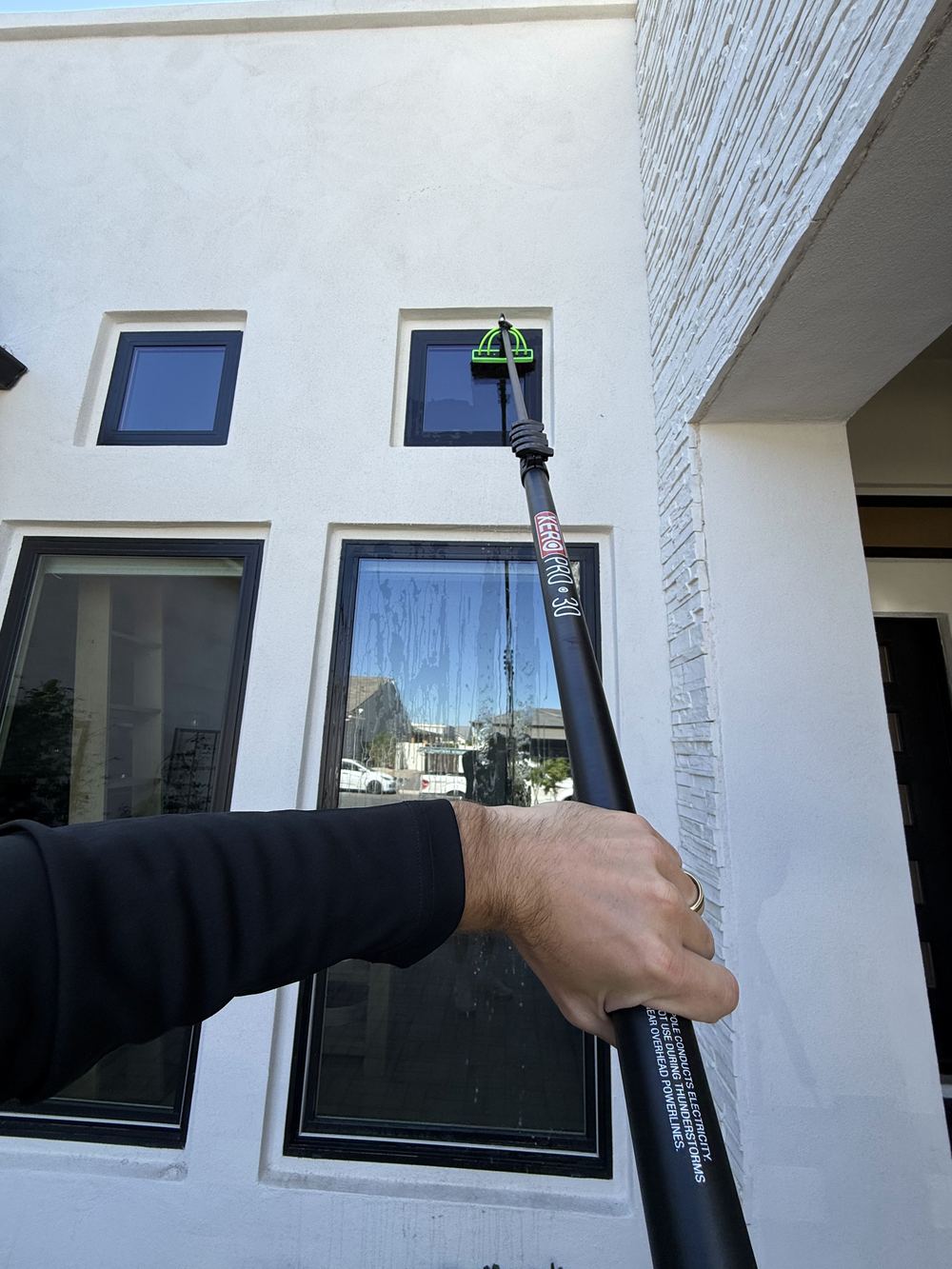
White cloudy patches on glass that won't come off no matter how much you wipe — every East Valley homeowner knows them. These are hard-water mineral deposits, and Arizona has some of the worst in the country. Here's what actually works to remove them, and what makes them worse.
Why Arizona Has Such Bad Hard Water
Water hardness is measured in grains per gallon (GPG). The national average is about 7 GPG. Phoenix metro water typically runs 15–20+ GPG — classified as "extremely hard."
This water comes from the Colorado River and local groundwater, both heavily mineralized through desert rock. When it hits your windows from irrigation overspray or rain runoff and then evaporates in Arizona's heat, it leaves a concentrated mineral deposit behind. The longer it sits, the more it bonds to the glass — eventually etching microscopic pits that make glass look permanently foggy.
What Actually Works
White Vinegar (for light deposits)
Undiluted white vinegar (5% acidity) dissolves calcium carbonate and works on fresh or light buildup. Spray directly on glass, let dwell 5–10 minutes, scrub with a non-scratch pad, then rinse with distilled water. Squeegee dry immediately.
Limitation: Vinegar doesn't have enough acidity for heavy or long-standing deposits, and won't help if glass is already etched.
Professional Hard-Water Remover (for moderate deposits)
Products like Bio-Clean contain stronger acids that dissolve mineral buildup more aggressively. This is what professional window cleaners use. Always test on a small area first, and never use on tinted glass or low-E coatings without checking with the manufacturer.
Glass Polish / Cerium Oxide (for etched glass)
Once hard water has actually etched pits into the glass surface, acids alone won't restore clarity — the damage is physical. Glass polishing with cerium oxide (the same compound used for optical glass) restores transparency by removing the thin etched layer. This is a professional-grade process requiring the right equipment and experience to avoid swirl marks.
⚠️ What doesn't work: Regular window cleaner (Windex etc.) has no acidity and does nothing to mineral deposits. Abrasive pads and steel wool scratch the glass. Pressure washing blasts water on but doesn't dissolve minerals.
The Most Common Mistake: Rinsing With Tap Water
Rinsing with Arizona tap water after treatment immediately re-deposits minerals on the glass. You end up with the original deposit plus new ones from the rinse. The only correct rinse after hard-water treatment is purified, deionized water — water with its mineral content removed. This is why professionally cleaned windows stay cleaner longer.
How to Prevent Hard-Water Deposits
The main source of hard-water deposits on windows in Arizona isn't rain — it's irrigation overspray. Sprinkler heads aimed too close to the house hit windows repeatedly, depositing minerals that accumulate over months.
- Adjust sprinkler heads so they don't hit window glass. A few minutes of adjustment prevents years of buildup.
- Schedule professional cleanings twice a year before deposits have time to etch.
- Apply a hydrophobic coating after a professional clean — it makes water bead off rather than sit and evaporate.
Our window cleaning service includes hard-water treatment as standard across Queen Creek, San Tan Valley, Gilbert, Mesa, Chandler and Tempe.